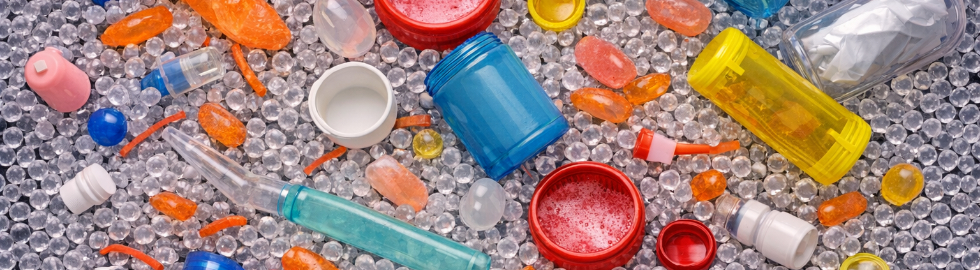
As plastics recycling scales, additives are increasingly essential to maintain performance and processability. In this class, we explore how stabilizers, compatibilizers, and chain extenders are used to address degradation, contamination, and mixed-polymer streams. We will show examples of how additives can be used to address real-world recycling challenges, including property recovery, odor mitigation, and compliance with regulatory and food-contact requirements.
If you can't attend one or several sessions live, or if you want to review some concepts, the recordings will be available after each session.
Who Should Attend?
This course is designed for professionals involved in plastics recycling, sustainability initiatives, and circular materials development, including:
Recycling and sustainability engineers
Materials, polymer, and R&D engineers
Compounders and processing engineers
Quality, regulatory, and compliance teams
Brand owners and product developers working with recycled content
Additive suppliers, application engineers, and technical sales professionals
Students and early‑career engineers seeking practical knowledge of additives used in plastics recycling
Why Should You Attend?
As plastics recycling scales, maintaining material performance becomes one of the industry’s greatest challenges. Mechanical recycling introduces degradation, contamination, odor, and variability that cannot be solved by processing alone.
This course explains how additives enable recycled plastics to meet:
Performance requirements
Processability targets
Regulatory and food‑contact compliance
It bridges the gap between sustainability goals and real‑world manufacturing demands.
Everyday Problems You’ll Address
Why do recycled plastics lose strength, toughness, or color after multiple recycling cycles?
How can degradation caused by heat, shear, and oxygen be managed?
How do mixed‑polymer streams and contamination reduce performance?
What causes persistent odor issues in recycled materials, and how can they be mitigated?
How can recycled plastics meet regulatory and food‑contact requirements while balancing cost and performance?
What You’ll Learn
You will learn:
Mechanisms of polymer degradation in recycled plastics
How stabilizers protect materials during reprocessing
How compatibilizers improve performance in mixed and contaminated polymer streams
How chain extenders restore molecular weight and processability
Additive strategies for odor mitigation and aesthetic improvement
Real‑world examples of additive solutions used in plastics recycling
Key considerations for regulatory and food‑contact compliance
Why This Course Matters
The success of plastics recycling depends on producing materials that are consistent, high‑performing, and compliant with regulations. Additives are essential enablers of circular plastics.
This course matters because it:
Helps close the performance gap between recycled and virgin materials
Enables higher‑value applications for recycled plastics
Improves reliability and market acceptance of recycled materials
Reduces regulatory and compliance risk
Supports technically viable, economically sustainable, and scalable recycling systems
Registration Information
SPE Premium Member
FREE
SPE Members
$49
SPE Student Members
$25
(Student but not a student member? Join SPE for free to get program discounts!)
Dr. Zacharia was trained as a materials scientist (MIT) focusing in bio and polymeric materials, followed by a postdoc at the University of Toronto. She was faculty at Texas A&M University in mechanical engineering and then at the University of Akron in Polymer Engineering. Since 2019 she has been at the University of Wisconsin Madison, where she is the Program Director for online engineering programs in polymers.
This educational program is provided as a service of SPE. The views and opinions expressed on this or any SPE educational program are those of the Speaker(s) and/or the persons appearing with the Speaker(s) and do not necessarily reflect the views and opinions of the Society of Plastics Engineers, Inc. (SPE) or its officials, employees or designees. To comment or to present an opposing or supporting opinion, please contact us at info@4SPE.org.
Refund Policy
Full refund 14 days prior to the event start date. Please contact customerrelations@4spe.org for assistance with registration.
Copyright & Permission to Use
When you enter a SPE, a division of PLASTICS event or program, you enter an area where photography, audio, and video recording may occur. By entering the event premises, you consent to interview(s), photography, audio recording, video recording and its/their release, publication, exhibition, or reproduction to be used for news, webcasts, promotional purposes, telecasts, advertising, inclusion on websites, social media, or any other purpose by SPE and their affiliates and representatives. Images, photos and/or videos may be used to promote similar events in the future, highlight the event and exhibit the capabilities of SPE. You release SPE, their officers and employees, and each and all persons involved from any liability connected with the taking, recording, digitizing, or publication and use of interviews, photographs, computer images, video and/or or sound recordings. By entering the event premises, you waive all rights you may have to any claims for payment or royalties in connection with any use, exhibition, streaming, web casting, televising, or other publication of these materials, regardless of the purpose or sponsoring of such use, exhibiting, broadcasting, web casting, or other publication irrespective of whether a fee for admission or sponsorship is charged. You also waive any right to inspect or approve any photo, video, or audio recording taken by SPE or the person or entity designated to do so by SPE. You have been fully informed of your consent, waiver of liability, and release before entering the event.
Anti-Trust Statement
No discussion among members, volunteers, or staff, which attempts to arrive at any agreement regarding prices, terms or conditions of sale, distribution, volume, territories, or customers;
No activity or communication which might be construed as an attempt to prevent any person or business entity from gaining access to any market or customer for goods or services or any business entity from obtaining services or a supply of goods;
No activity or communication which might be construed as an agreement to refrain from purchasing or using any materials, equipment, services or supplies of or from any supplier; or
No other activity which violates anti-trust or applicable laws aimed at preventing unfair competition.